Hurontario LRT Real Estate Impact: What the Data Shows
Built to protect your equity
What the Hurontario LRT (Hazel McCallion Line) is likely to mean for home values in Mississauga and Brampton: the 2026 project status, Ontario LRT price evidence, a worked dollar example and a checklist for buyers and sellers.
Why sellers choose Amir
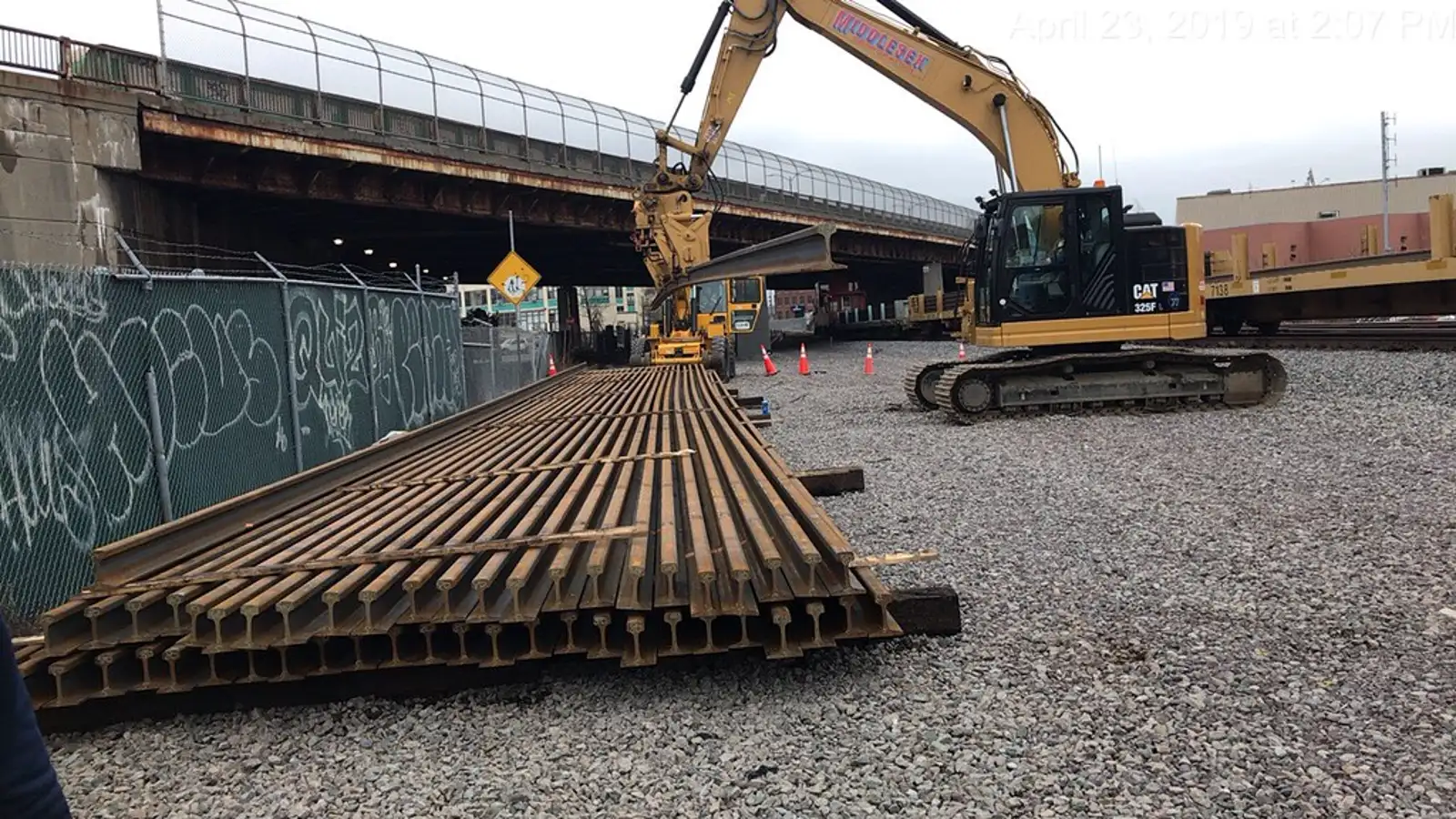
Short answer: The Hurontario LRT (now called the Hazel McCallion Line) is likely to add a modest price premium for homes within about 800 metres of a stop. It will not lift prices across the whole city. Ontario’s closest comparison, Waterloo’s ION, showed roughly a 1.4% premium near stations. With no firm opening date, the wider market and interest rates still matter more for most sellers.
Key takeaways
- The 18 km, 19-stop line runs from Port Credit to Steeles Avenue in Brampton. Metrolinx’s last stated target was spring 2028, but in mid-2026 it told residents there is no firm completion date.
- Ontario evidence points to a small premium close to stations that fades by about 2 km. A large jump has only appeared where the city also upzoned land.
- The biggest winners tend to be land that can be redeveloped and homes within walking distance of a stop. Homes in the suburbs farther out see little effect.
- Market swings in 2026 (GTA benchmark down 4.3% year over year) have been larger than any LRT premium so far.
- Construction years bring traffic, noise and closed intersections, and some buyers mark prices down for that.
Where the Hurontario LRT stands in late 2026
The line is an 18-kilometre, 19-stop route between Port Credit and Steeles Avenue. In April 2026, Metrolinx told Mississauga it was working to finish building the initial route by spring 2028, a target that does not include the downtown loop or any extension. Two months later, at a June 25 town hall, Metrolinx said there is no completion date for the project anymore. The same report puts the cost at no less than $5.5 billion, up from the original $4.6 billion contract.
This matters for real estate because buyers pay for transit they can actually use. Until trains are running, much of any premium is a forecast that buyers may discount.
Does an LRT actually raise home values in Ontario?
The best Ontario evidence comes from Kitchener-Waterloo’s ION line. A University of Waterloo hedonic study found that homes within roughly 800 metres of stations sold for about 1.4% more. That premium faded to almost nothing by about 2 km, and suburban station areas showed no significant uplift.
You may see a bigger number quoted. Another Waterloo study found that the station area near the universities rose around 40% after the LRT was announced. The researchers warn that rezoning happened at the same time, so the LRT can’t take all the credit. The results also differed by station and by housing type.
The practical lesson is that transit alone gives a small, local bump. Transit combined with permission to build more is what moves land values.
Which Hurontario properties are most likely to benefit?
Mississauga’s Official Plan treats its delineated Major Transit Station Areas as protected MTSAs, and the city applies inclusionary zoning in specific protected MTSAs. This means some new condo projects near stations must include affordable units. That shapes what developers can pay for land.
Developers are already acting on this. A University of Toronto School of Cities study found a sharp spike in the value of new dwelling projects around Cooksville in about 2023, far above comparable control areas. For a closer look at that neighbourhood, see our guide to Cooksville and the Hurontario LRT.
Comparison: likely LRT effect by property type
| Property | Likely effect | Why |
|---|---|---|
| Land or older lots inside a station area | Strongest | Value is driven by redevelopment rights, not just the commute |
| Condo within a 5-10 minute walk of a stop | Small premium once trains run | Matches the roughly 1.4% near-station pattern from ION. New supply nearby can cap gains |
| Freehold home 800 m to 2 km away | Minimal | In the Waterloo data, the premium fades to near zero by about 2 km |
| Home fronting Hurontario Street | Mixed | Easy access but more noise, and construction drags on resale until the line opens |
| Rental in an older corridor building | Watch closely | Redevelopment pressure can rise, even though Cooksville eviction filings fell during construction |
What could an LRT premium be worth? A worked example
Start with the most recent city-wide figure. Mississauga’s average price was $929,600 in September 2026, compared with $969,501 a year earlier (a Zoocasa analysis of TRREB data). That is a drop of about 4.1%.
- Possible LRT premium: $929,600 × 1.4% = about $13,000, for a home within roughly 800 m of a working station, if the Waterloo pattern holds.
- Typical market swing: TRREB’s GTA benchmark price was down 4.3% year over year in October 2026. On the same $929,600 home, that is about $40,000.
In this example the market swing is about three times the likely LRT premium. Don’t hold out for the trains if your timing is otherwise right, and don’t overpay today for a premium that only arrives when the line opens.
How do rates and the 2026 market change the picture?
Buyers are price-sensitive right now. In October 2026, GTA sales fell to 5,603, down 7.9% from a year earlier, and the average price slipped 2.7% to $1,024,108. The Bank of Canada raised its policy rate to 2.50% on October 28, 2026, and its next decision is December 9. Variable-rate borrowing costs follow that rate. In a market like this, buyers weigh their monthly payment well ahead of future transit. Corridor sellers should price on today’s comparable sales.
Should you buy or sell near the Hurontario LRT?
Checklist for buyers
- Measure the walking distance (not straight-line distance) to the nearest stop. Under about 800 m is where a premium shows up.
- Check whether the property sits inside a protected MTSA on Mississauga’s Official Plan maps. Brampton buyers should check the City of Brampton’s own plans for the north end.
- Look up development applications nearby. A new tower can block a view, and it can also bring retail you’ll use.
- Budget for living with construction until at least 2028. The timeline has slipped repeatedly.
- Stress-test your mortgage at today’s rate, not the rate you hope for.
Checklist for sellers
- Price on recent comparable sales, not on future transit.
- If your lot is large or in a station area, ask whether it has redevelopment value before you list it as a house.
- Point out walkability to a stop in the listing, but be honest about construction.
- Know what selling will cost you before you set your net target. Our guide to how real estate commission works in Ontario explains it.
The Brampton end of the line finishes at the Brampton Gateway Terminal at Steeles. If you are weighing homes there, our Brampton real estate guide and the Fletcher’s Creek neighbourhood page give useful local context.
FAQ
When will the Hurontario LRT open?
There is no confirmed date. Metrolinx targeted spring 2028 for building the initial route, but in June 2026 it said no completion date is set.
Will my home value jump when the trains start running?
Probably not by much unless you are within walking distance of a stop. Waterloo’s ION showed about a 1.4% premium within roughly 800 m.
Does construction hurt home prices?
It can make homes on Hurontario Street itself harder to sell while closures and noise last. Studies don’t isolate this effect for Hurontario, so price against current comparable sales.
Is the downtown Mississauga loop still part of the line?
Not in the current build. It was removed because of cost, and the 2028 target excludes the loop and any extension.
Talk it through with a local agent
Whether the LRT helps your sale or purchase depends on the exact address, the zoning and today’s comparable sales. If you are weighing a move along the Hurontario corridor, Amir Rehmani’s team can walk you through the numbers for your specific property.
See what the LRT means for your address.
Tell us about the property and we will walk through recent comparable sales, distance to the nearest stop and the zoning around it, with no obligation.
Local expertise
Explore the Communities. Understand the Market.



Your next chapter begins here
Your Property Deserves a More Considered Approach.
Know its market position. Understand your options. Plan your next move.
Request Your Free Home Evaluation