FHSA Meaning: What It Is and What It’s Worth in the GTA
Built to protect your equity
What the First Home Savings Account is, what each CRA rule means in plain English, and what a full FHSA is worth against October 2026 GTA prices, down payment minimums and Ontario’s land transfer tax refund.
Why sellers choose Amir
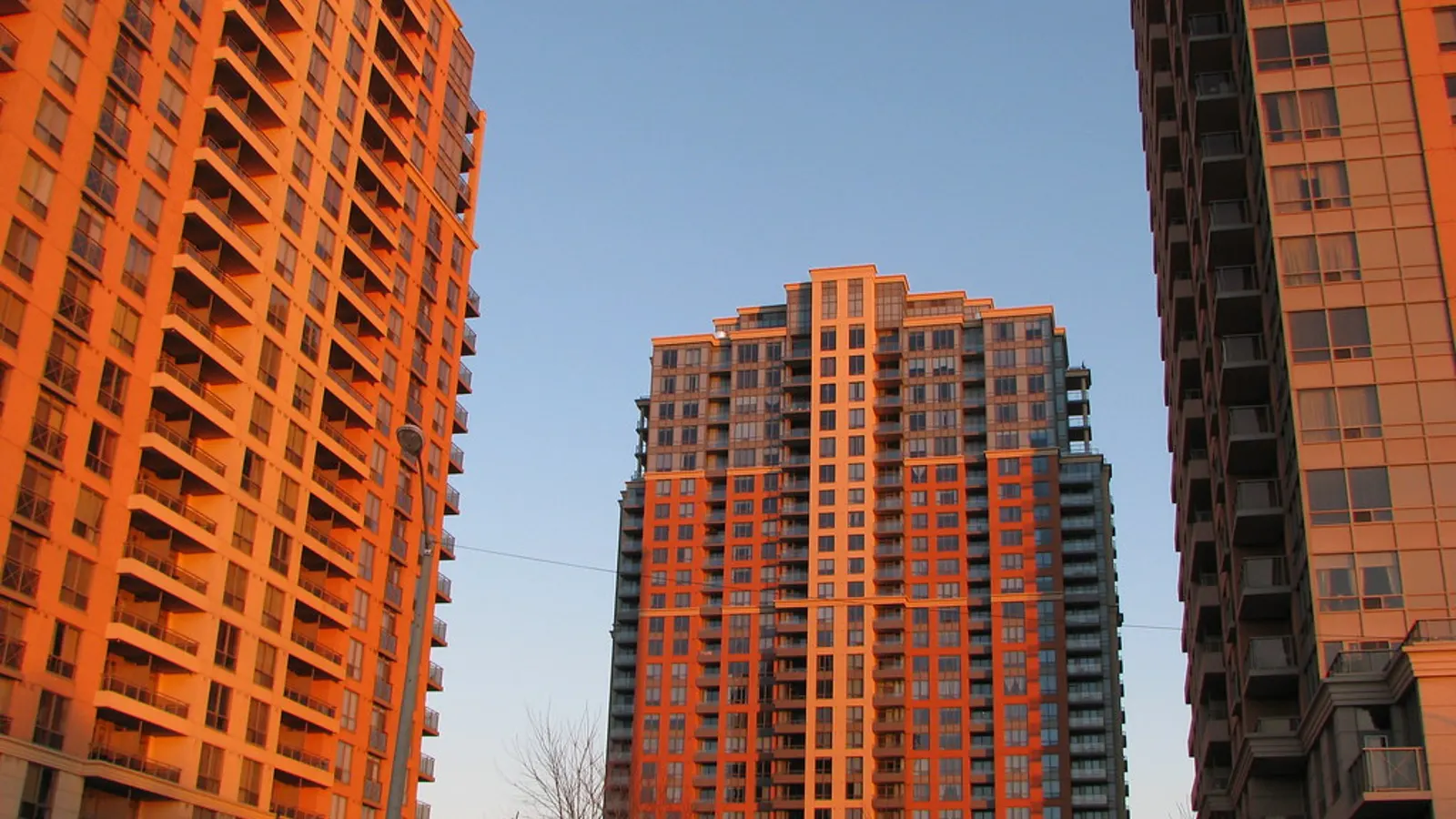
FHSA stands for First Home Savings Account, a registered account for first-time home buyers in Canada. You can put in up to $8,000 a year and $40,000 in total, deduct what you contribute from your taxable income, and take it all out tax-free to buy a qualifying first home, under rules set by the Canada Revenue Agency.
Key takeaways
- The FHSA works like an RRSP when you put money in (tax deduction) and like a TFSA when you take it out (no tax), as long as the withdrawal is for a qualifying first home.
- “First-time home buyer” has a specific meaning: you haven’t lived in a home you or your spouse owned during the current year or the previous four calendar years.
- On October 2026 GTA prices, one full FHSA covers the minimum down payment on an average condo apartment. Two FHSAs go further, but not far enough for a detached home.
- You can use the FHSA and the RRSP Home Buyers’ Plan for the same home, and Ontario’s land transfer tax refund for first-time buyers can come on top.
What does FHSA mean, exactly?
The full name is the Tax-Free First Home Savings Account. Accounts opened to the public on April 1, 2023. According to the CRA’s FHSA statistics, about 739,000 people had opened one by December 31, 2023, with an average balance of $3,899. That is still the latest figure the CRA has published.
Two things set the FHSA apart. Contributions are generally tax-deductible, so you get a refund when you file. A qualifying withdrawal is tax-free, so you never pay tax on the money you saved or the growth on it. No other registered account gives you both. For the full contribution rules and tips, see our FHSA limits and rules guide.
What do the FHSA terms mean in plain English?
Most of the confusion comes from CRA terms that sound simple but aren’t. The definitions below are from the CRA’s FHSA definitions page.
| CRA term | What it means for you |
|---|---|
| Qualifying individual | When you open the account you must be 18 or older, a resident of Canada, and a first-time home buyer. |
| First-time home buyer (to open) | In the current year or the previous four calendar years, you didn’t live as your principal residence in a home that you owned, or that your current spouse or common-law partner owned. |
| First-time home buyer (to withdraw) | The same four-year test, but it counts only homes you owned, and the 30 days just before the withdrawal are ignored. |
| Participation room | $8,000 in the year you open your first FHSA. Unused room carries forward, but only up to $8,000. That means the most you can ever add in one year is $16,000. |
| Lifetime limit | $40,000 in total contributions. Investment growth doesn’t count toward it. |
| Maximum participation period | The account must be used or closed by December 31 of the year of the earliest of three events: its 15th anniversary, your 71st birthday, or the year after your first qualifying withdrawal. |
One detail many people miss: room only starts building once you open an account. Opening one this year, even with just a few dollars in it, starts your $8,000 room for 2026. You must also file Schedule 15 with your tax return for the year you open it, even if you contribute nothing.
What is an FHSA worth on a GTA home in 2026?
Here is a worked example using current prices. In October 2026, TRREB’s Market Watch reported a GTA average selling price of $1,024,108 across all home types, down 2.7% from a year earlier. The condo apartment average was $621,400 and the detached average was $1,310,627.
The federal minimum down payment rules require 5% of the first $500,000, then 10% of the portion between $500,000 and $1.5 million. Mortgage insurance isn’t available on homes priced at $1 million or more, which in practice means 20% down.
Average GTA condo apartment: $621,400
- 5% of $500,000 = $25,000
- 10% of $121,400 = $12,140
- Minimum down payment = $37,140
One person with a full $40,000 FHSA covers that minimum with $2,860 left over for closing costs. A couple with two full FHSAs has $80,000 tax-free, about 12.9% of the price. That much down lowers the mortgage insurance premium and the amount you borrow.
Average GTA detached home: $1,310,627
At this price you need 20% down, or $262,125. Two full FHSAs cover about 31% of that, so most buyers would also need the RRSP Home Buyers’ Plan, TFSA savings or family help. Try your own numbers in our home affordability calculator.
The tax refund on top
The deduction is worth your marginal tax rate times what you contribute. As an illustration only, a buyer with a 30% combined marginal rate who puts in $8,000 would get about $2,400 back. Five years of full contributions would return about $12,000, and that refund can go straight back into savings. Your actual rate depends on your income.
How does the FHSA compare with a TFSA and the Home Buyers’ Plan?
| FHSA | TFSA | RRSP Home Buyers’ Plan | |
|---|---|---|---|
| Tax deduction on contributions | Yes | No | Yes (as RRSP contributions) |
| Tax-free withdrawal for a home | Yes | Yes | Yes, but it’s a loan |
| Must repay? | No | No | Yes, over time |
| If you don’t buy | Transfer to an RRSP | Keep using it | N/A |
The CRA confirms that you can make an HBP withdrawal and a qualifying FHSA withdrawal for the same home if you meet the conditions for each. Which one to fund first depends on your income and timeline. We cover that in FHSA vs. RRSP Home Buyers’ Plan: which first?
What happens if you never buy a home?
You don’t lose the money. Before the participation period ends, you can move the balance directly into your RRSP or RRIF. According to the CRA, that transfer doesn’t use up your RRSP deduction room. If you do nothing and the period ends with money still in the account, the fair market value is added to your income for that year. A cash withdrawal that isn’t qualifying is taxable too.
FHSA checklist for Ontario buyers
- Open the account early. Room doesn’t start building until you open one.
- Track your room. Contributions over your limit are taxed at 1% per month on the highest excess amount.
- Sign before you withdraw. A qualifying withdrawal needs a written agreement to buy or build, with closing before October 1 of the following year. You also fill out Form RC725 with your financial institution (CRA).
- Plan to move in. You must intend to live there as your principal residence within one year of buying or building.
- Claim Ontario’s land transfer tax refund. Eligible first-time buyers can get up to $4,000 back. Your lawyer can usually claim it when the sale registers.
- Budget for closing costs. Your FHSA can’t cover everything. Use our closing costs checklist for Ontario buyers.
- Watch rates. The Bank of Canada raised its policy rate to 2.5% on October 28, 2026, its first increase since July 2023. Get pre-approved before you count on a budget.
FHSA meaning: frequently asked questions
Is an FHSA the same as a TFSA?
No. Both allow tax-free withdrawals, but only FHSA contributions are tax-deductible, and only a first home qualifies for the tax-free withdrawal.
Can my spouse and I both have an FHSA?
Yes, if each of you qualifies. The CRA allows co-buyers to each make a qualifying withdrawal from their own FHSA for the same home. Keep in mind that the four-year test for opening an account also counts a home your spouse owned.
I owned a home years ago. Can I still open an FHSA?
Possibly. If you haven’t lived in a home that you or your current spouse owned during this calendar year or the previous four, you meet the CRA’s first-time buyer test.
Can I contribute after I buy?
Not in a useful way. Your participation period ends at the end of the year after your first qualifying withdrawal, so put in as much as you can before you buy.
Talk through your first purchase
Knowing what the FHSA means is step one. Making it work alongside your mortgage, the HBP and Ontario’s rebates is where a plan helps. If you’re buying your first home in Mississauga or anywhere in the GTA, Amir Rehmani can walk you through your numbers and your options with no pressure.
Put your FHSA to work on the right home.
Tell us your budget and timeline and we will show you what’s selling in your price range and work out your down payment and cash to close, with no obligation.
Local expertise
Explore the Communities. Understand the Market.



Your next chapter begins here
Your Property Deserves a More Considered Approach.
Know its market position. Understand your options. Plan your next move.
Request Your Free Home Evaluation