Mississauga Realty Taxes 2026: Rates, Bills & Savings
Built to protect your equity
Mississauga’s 2026 residential tax rate turned into real dollars: the City, Region and education split, when interim and final bills are due, how taxes are adjusted when you buy or sell, and the rebates owners can claim.
Why sellers choose Amir
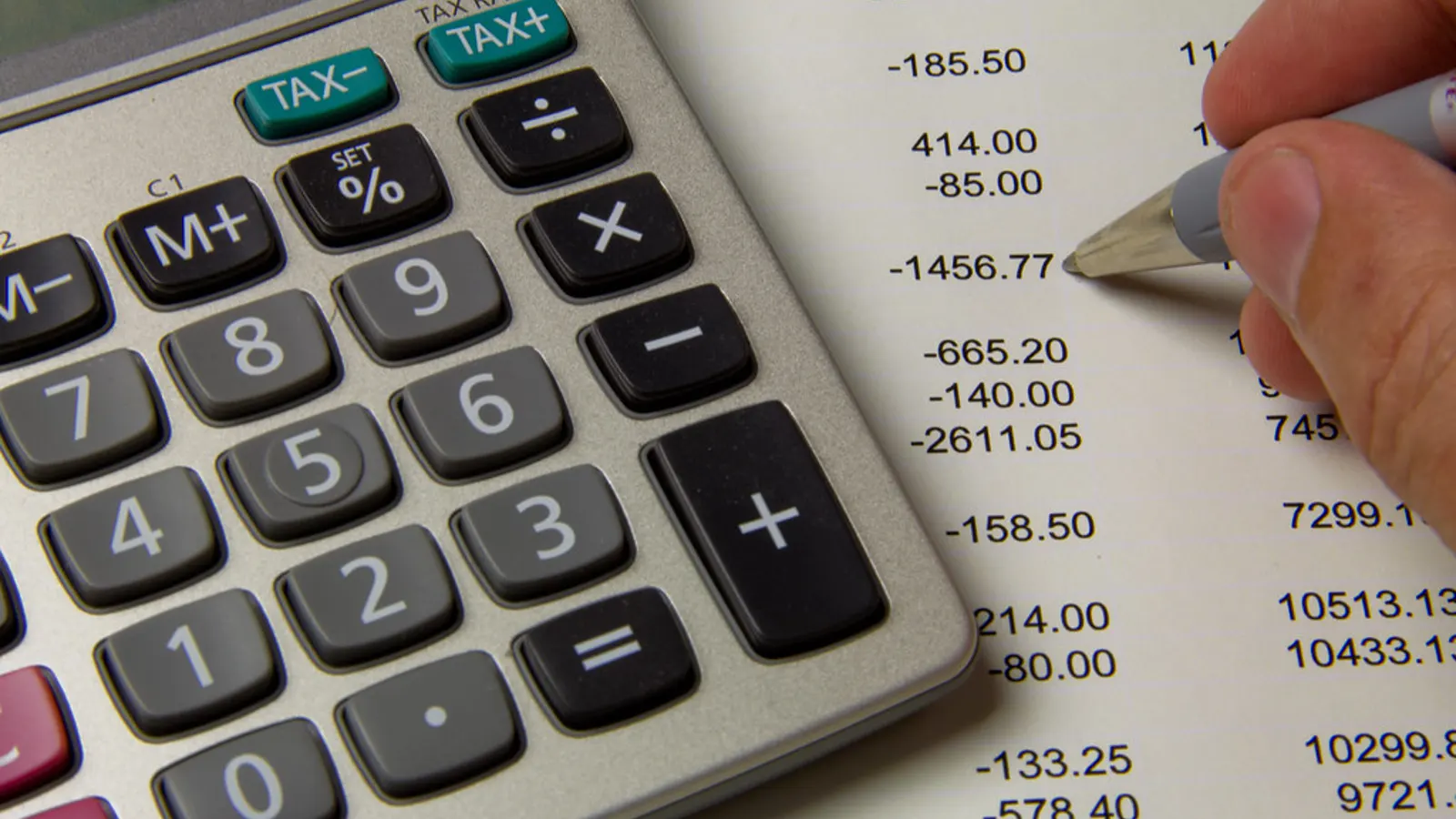
Mississauga realty taxes (property taxes) for 2026 are 1.087901% of your MPAC assessed value. That rate covers the City, the Region of Peel and the provincial education levy. A home assessed at $700,000 pays about $7,615 a year. That bill comes in two parts: an interim bill early in the year and a final bill due in three summer instalments.
Key takeaways
- The 2026 residential rate is 1.087901%, and only about 37 cents of each tax dollar stays with the City.
- Taxes are based on your MPAC assessment, which still uses January 1, 2016 values, not today’s market price.
- The combined 2026 increase is 5.21%, or about $54 more per $100,000 of assessment.
- When you buy or sell, taxes are split to the day on closing through the statement of adjustments.
- Low-income seniors and homeowners with disabilities may qualify for a $601 City rebate plus a provincial grant of up to $500.
What are realty taxes in Mississauga?
“Realty taxes” is the term lawyers and listings use for property taxes. One bill from the City of Mississauga covers three governments. The City collects for its own services (transit, fire, roads, parks), for the Region of Peel (police, water, paramedics, social housing) and for the Province (education). In the City’s 2026 budget, each residential tax dollar splits 37 cents to the City, 48 cents to the Region and 15 cents to education (City of Mississauga, January 2026). The rate is the same in all 11 wards (City of Mississauga).
What is the 2026 Mississauga property tax rate?
As of the final rates by-law adopted in spring 2026, the residential rate is 1.087901%. That is 0.396141% for the City, 0.538760% for the Region of Peel and 0.153000% for education (By-law 0061-2026). The Region of Peel publishes the same total in its 2026 tax rate table.
Council’s 2026 budget raised the City’s share of the bill by 1.61% and the Region’s by 3.60%, a combined residential increase of 5.21%. That works out to $53.91 more for every $100,000 of assessed value, or $377.37 on a $700,000 home (City of Mississauga).
How Mississauga compares with nearby cities
Here is the same $700,000 assessment run through each city’s 2026 residential rate (rates from Region of Peel for Brampton and Mississauga, the Town of Oakville and the City of Toronto). Treat the table as a rate comparison only. Typical assessed values differ from city to city, so actual bills on similar homes will vary.
| City (2026) | Residential rate | Annual tax on $700,000 assessment |
|---|---|---|
| Brampton | 1.253381% | $8,773.67 |
| Mississauga | 1.087901% | $7,615.31 |
| Oakville | 0.850960% | $5,956.72 |
| Toronto | 0.767311% | $5,371.18 |
How to calculate your Mississauga tax bill (worked example)
The formula is MPAC assessed value × total tax rate. Use the value on your Property Assessment Notice, not your home’s market price. For the 2027 tax year, MPAC is still using values as of January 1, 2016 (MPAC), so most assessments sit well below today’s prices.
Example: a Mississauga home assessed at $700,000, using the 2026 rates in By-law 0061-2026:
| Portion | Rate | Annual amount |
|---|---|---|
| City of Mississauga | 0.396141% | $2,772.99 |
| Region of Peel | 0.538760% | $3,771.32 |
| Education (Ontario) | 0.153000% | $1,071.00 |
| Total | 1.087901% | $7,615.31 |
That is about $635 a month. Add it to your mortgage payment when you budget. If you are still saving for a purchase, our guide to minimum down payments for GTA buyers shows how taxes fit alongside the upfront costs.
When are Mississauga property taxes due?
Most homeowners get two bills a year. The interim bill, usually issued in early February, is about 50% of last year’s taxes. The final bill, usually issued in early June, charges the rest of the year at the new rate (City of Mississauga). For 2026, final residential instalments were due July 2, August 6 and September 3 (By-law 0062-2026). Because the interim bill is based on last year, the whole yearly increase lands in those summer instalments.
Late payments cost 1.25% of the overdue instalment the day after the due date, then another 1.25% on the first of each month. The City cannot waive or appeal these charges (City of Mississauga). On a $1,330 instalment, one missed date costs about $16.63, and the charge repeats every month until you pay. A pre-authorized payment plan avoids this.
How are realty taxes handled when you buy or sell?
Taxes follow the property, not the owner. On closing, the lawyers prepare a statement of adjustments. It credits the seller for any taxes already paid past the closing date, or credits the buyer for any taxes the seller still owes. For example, say the seller of the $700,000-assessed home above has paid the full 2026 bill of $7,615.31 and the sale closes October 1. The buyer reimburses the seller for 92 days, or about $1,919 ($7,615.31 ÷ 365 × 92). This is a simplified illustration: the lawyers’ statement of adjustments sets the exact figure, including how the closing day is counted. The City notes that sellers should tell it about the sale so bills go to the new owner (City of Mississauga).
Sellers can use this adjustment in their net-proceeds math. Our step-by-step guide to selling a house in Mississauga covers the other closing costs.
Don’t confuse realty tax with land transfer tax
Buyers also pay a one-time Ontario land transfer tax on closing. It is separate from yearly realty taxes. The provincial rates are 0.5% up to $55,000, 1% from $55,000 to $250,000, 1.5% from $250,000 to $400,000, 2% from $400,000 to $2 million, and 2.5% above $2 million on homes with one or two units (Ontario.ca). On a $900,000 purchase, that is $275 + $1,950 + $2,250 + $10,000 = $14,475. First-time buyers can get a refund of up to $4,000 (Ontario.ca), which brings that example down to $10,475. Mississauga does not add a second, municipal land transfer tax. That extra tax applies only to homes in the City of Toronto (City of Toronto). New to the market? See our newcomer home buying guide.
Can you lower your Mississauga property taxes?
Check and appeal your assessment
For residential properties, you must first file a free Request for Reconsideration with MPAC. You can go to the Assessment Review Board only after that (City of Mississauga). The deadline is printed on your Property Assessment Notice (MPAC). Keep paying while you appeal so you don’t build up late charges.
Claim the rebates you qualify for
- City low-income rebate: $601 for 2026, for homeowners 65+ or with a disability who receive GIS or ODSP and have owned and lived in the home for at least a year. You must apply every year by December 31 (City of Mississauga; rebate page). The rebate is indexed each year, so check the current amount on the application form. If you qualify, you also get the stormwater charge subsidy automatically.
- Ontario Senior Homeowners’ Property Tax Grant: for 2026, the lesser of $500 and the eligible property tax you paid for 2025. It shrinks once income passes $35,000 (single) or $45,000 (couples), and you claim it on Form ON-BEN with your tax return (Canada Revenue Agency).
Mississauga property tax checklist
- Look up your MPAC assessed value and confirm the property details are correct.
- Multiply your assessed value by 1.087901% to estimate your 2026 bill.
- Expect next year’s increase to show up in the summer instalments, not the interim bill.
- Set up pre-authorized payments to avoid 1.25% monthly late charges.
- Buying? Budget for land transfer tax and ask your lawyer about the tax adjustment.
- Selling? Your lawyer will usually order a tax certificate from the City, which confirms the taxes owing on closing (City of Mississauga). Keep your paid-tax receipts for the adjustment and tell the City about the sale.
- 65+ or living with a disability? Apply for the City rebate before December 31.
Taxes are one part of what drives prices locally. For the bigger picture, read our Mississauga housing market forecast for 2026.
FAQ
Are realty taxes and property taxes the same thing?
Yes. “Realty taxes” is the legal and real estate term for the yearly property tax billed by the City of Mississauga.
Why is my tax bill based on a value far below my home’s price?
Ontario postponed reassessment, so MPAC still uses January 1, 2016 values (MPAC). The tax rate is set to raise the budget the City and Region need, so a lower assessment does not by itself mean a lower bill.
Do condo owners pay realty taxes separately from condo fees?
Yes. Each condo unit is assessed and taxed on its own at the same residential rate. Condo fees do not include your unit’s property tax.
Who pays property tax for the year a home sells?
Both parties share it. The seller pays up to the closing date and the buyer pays from then on, settled through the statement of adjustments.
Talk it through with Amir
If you’re weighing a purchase or sale and want to know what the carrying costs will really look like, reach out to Amir Rehmani for a no-pressure conversation about your numbers.
Know your real carrying costs.
Tell us about the home and we will walk you through taxes, closing adjustments and what you would net or pay, with no obligation.
Local expertise
Explore the Communities. Understand the Market.




Your next chapter begins here
Your Property Deserves a More Considered Approach.
Know its market position. Understand your options. Plan your next move.
Request Your Free Home Evaluation